


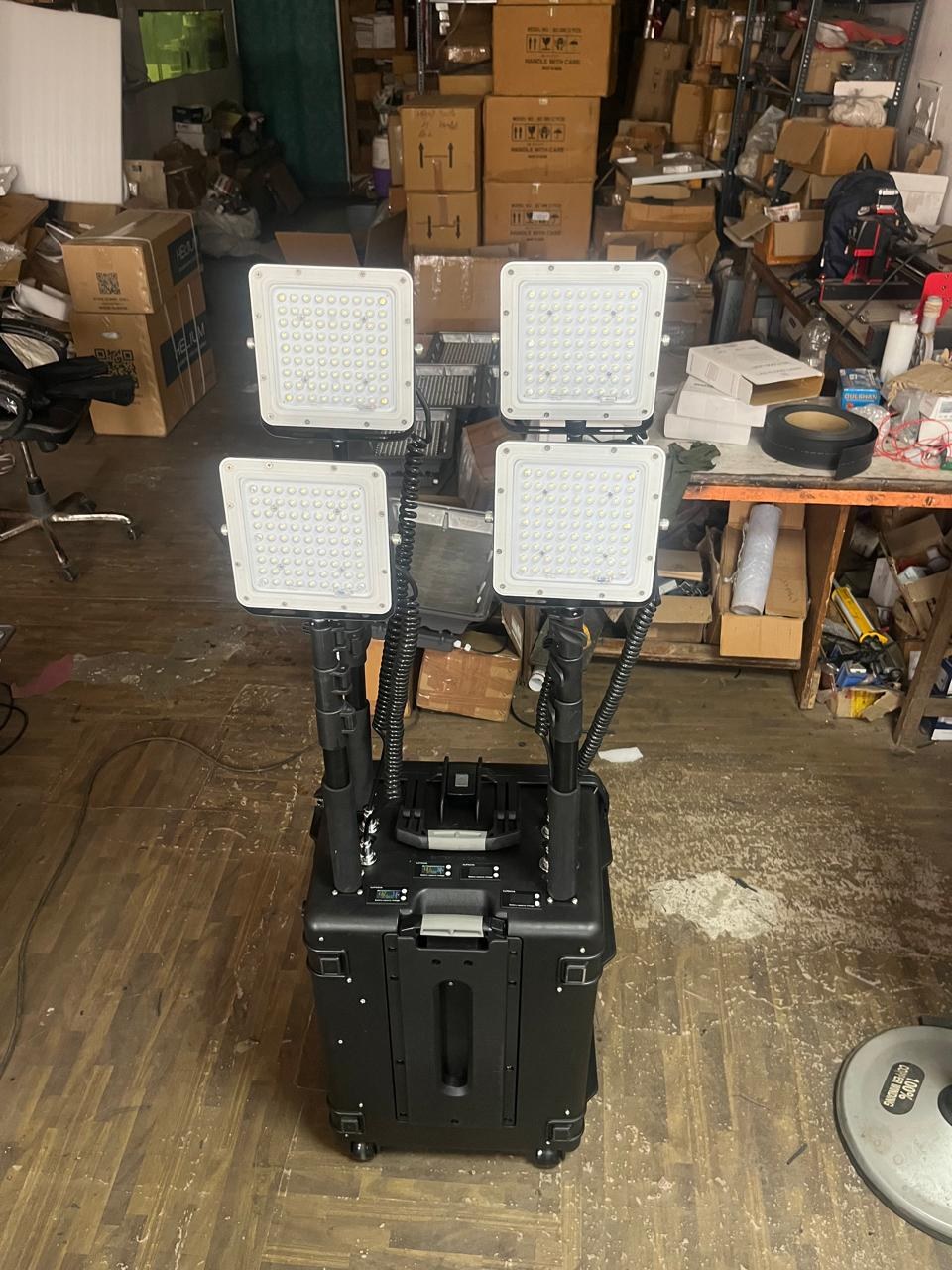
Start with the task and working area
A portable lighting enquiry becomes more useful when it describes the work rather than only a wattage. Explain whether the team needs light for repairs, inspection, a temporary work zone or access around equipment. Include approximate area dimensions, mounting height and obstructions. Wattage describes electrical input; it does not, on its own, establish light level or coverage.
State the required operating duration
Tell the supplier how many hours the system must operate and whether continuous maximum output is necessary. A battery capacity without voltage or test conditions is not a reliable runtime comparison. Request operating duration for the actual configuration, brightness setting and relevant ambient conditions. If multiple heads will be used, confirm whether the quoted duration applies with all heads on.
Review charging and available power
Describe the power available between deployments. Confirm charger input, recharge time and whether the equipment may operate while charging. Solar charging, vehicle charging and AC charging should be assessed individually; do not assume they are included in every portable lighting configuration.
Check handling and deployment
Ask for packed dimensions, operating weight, lifting arrangements, mast or tripod stability and setup requirements. A system that meets an illumination target may still be inconvenient for the available vehicle or team. Review the operating surface and wind-related instructions for elevated equipment.
Build a clear quotation request
Include quantity, application, destination, working-area dimensions, operating hours, charging source and any required documentation. Ask which accessories, batteries and chargers are included. RST can review these inputs against the offered configuration; final performance and supplied components should be confirmed in the technical offer.